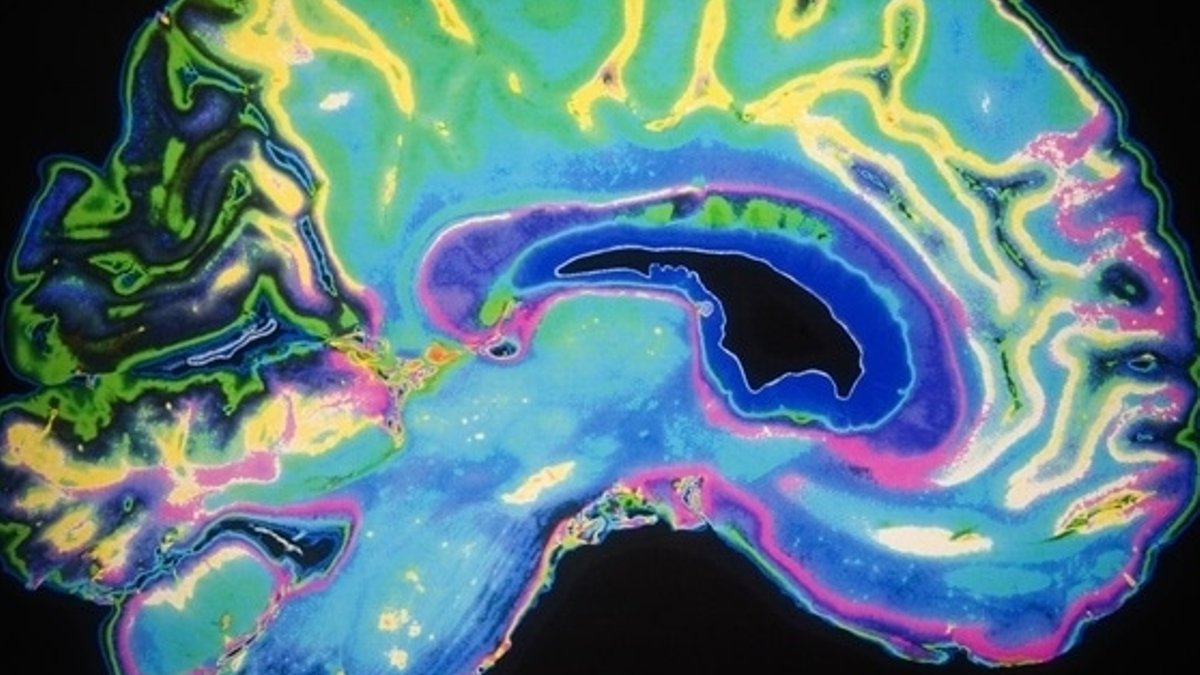
Brain scans have identified firing patterns that can predict Alzheimer’s disease risk years before memory loss begins, according to research led by Stanford Medicine. Researchers analyzed resting brain activity in older adults to distinguish between those with Alzheimer’s and “super agers”—people whose memory capacity matches that of individuals decades younger.
Defining the resilient brain
The team contrasted super agers with a group diagnosed with Alzheimer’s to identify distinct brain patterns. They found differences in functional connectivity, or how different brain regions communicate, that separated the two groups. This analysis led to the creation of the Alzheimer’s resilience-vulnerability connectome, or ARC score. The score distinguished super agers from Alzheimer’s patients with roughly 85% accuracy.
Zhang noted that standard cognitive tests may not reveal hidden biological abnormalities in older adults. Comparing super agers to a heterogeneous group of typical elderly individuals creates a flawed comparison. Instead, the team used data from large-scale imaging projects to isolate the specific neural patterns associated with resilience.
Applying the ARC score to more than 1,300 cognitively normal adults aged 55 to 70 revealed a spectrum of brain activity. Those with higher scores exhibited more Alzheimer’s-like brain patterns, while those with lower scores showed more super-ager-like activity. These scores provided early warnings of potential decline, even when no cognitive symptoms were present.
New Score Beats Traditional Biomarkers for Predicting Decline
The predictive power of the ARC score surpassed traditional demographic factors, amyloid-beta and tau biomarkers, and genetics. Even over a period of five to six years, baseline scores correctly identified which individuals would experience faster cognitive decline.
Related Post: Blood markers linked to brain aging during menopause
Potential for targeted treatment
Researchers believe this scoring system could eventually guide therapeutic strategies. Dr. Yu Zhang envisions using transcranial magnetic stimulation or cognitive training to shift brain activity patterns. These interventions have shown success in treating depression but require testing for cognitive decline. The goal is to identify the specific brain regions and activity levels that define a resilient brain. This knowledge helps researchers know exactly what a healthy pattern should look like.
The team is planning a trial to measure ARC scores before and after cognitive training. Dr. Kanhao Zhao noted that combining the new score with existing biomarkers improves prediction performance. The study included participants from the Open Access Series of Imaging Studies and the Alzheimer’s Disease Neuroimaging Initiative. These datasets provided the longitudinal data needed to validate the score’s predictive value over time.
Scope and limitations
About 10% of the elderly population may qualify as super agers based on memory and executive function. Zhang likened this to comparing apples to a fruit basket. The new scoring system avoids this issue by contrasting super agers directly with Alzheimer’s patients.
ARC Score Is Not a Diagnosis, Researchers Say
While the ARC score is a helpful guide for monitoring cognitive status, it is not diagnostic. A high or low score is only a snapshot and not destiny. The proportion of people with super-ager-like patterns tends to decrease with age due to brain injuries or neuropsychiatric conditions. Future work will focus on intervening at an early stage to prevent cognitive decline.
A new study published on Nov. 4 in Science Advances has identified a potential early biomarker for cognitive decline in older adults, which could be modified to prevent or delay the onset of Alzheimer’s disease. Researchers analyzed brain activity in adults aged 75 and older, including those with Alzheimer’s and so-called super agers who have the memory capacity of much younger people. From this, they developed a scoring system to assess brain activity in younger adults, aged 55 to 70, who showed no signs of cognitive decline.
Related Post: Alzheimer’s Group Aims to Improve Brain Care
According to the study, individuals with brain activity similar to that of Alzheimer’s patients were more likely to experience cognitive decline and develop amyloid-beta plaques within 12 years. In contrast, those with brain activity similar to super agers were more likely to avoid these outcomes. The new scoring system outperformed existing biomarkers, including demographics, amyloid-beta, tau, and genetics, in predicting cognitive decline. This could provide an early warning sign for Alzheimer’s disease risk in people with no apparent cognitive impairment.
Comparing resting-state functional MRI, which measures brain activity as participants lie still in a scanner, in 180 super agers and 110 people with Alzheimer’s disease, the researchers found distinct patterns of underactivity and overactivity in various brain regions that separated the two groups. These patterns are known as functional connectivity or the functional connectome. They derived a scoring system, known as the Alzheimer’s resilience-vulnerability connectome or ARC score, which could distinguish super agers from people with Alzheimer’s with roughly 85% accuracy.
Score Predicts Future Decline in Younger Adults
The researchers then applied their scoring system to more than 1,300 people aged 55 to 70 who had no signs of cognitive impairment. At the time of imaging, there were no clear cognitive differences between people who scored higher or lower, but a split emerged in the long-term data.
Researchers from Children’s National Hospital; the University of Texas at Austin; Lehigh University; Penn State College of Medicine; New York University Grossman School of Medicine; and the University of California, Los Angeles contributed to the work. The study received funding from the National Institutes of Health (grants R21AG080425, R01MH129694 and R01AG081768), a joint Rosenkranz Foundation-Knight Initiative program, an Alzheimer’s Association grant and a Lehigh University CORE grant.
