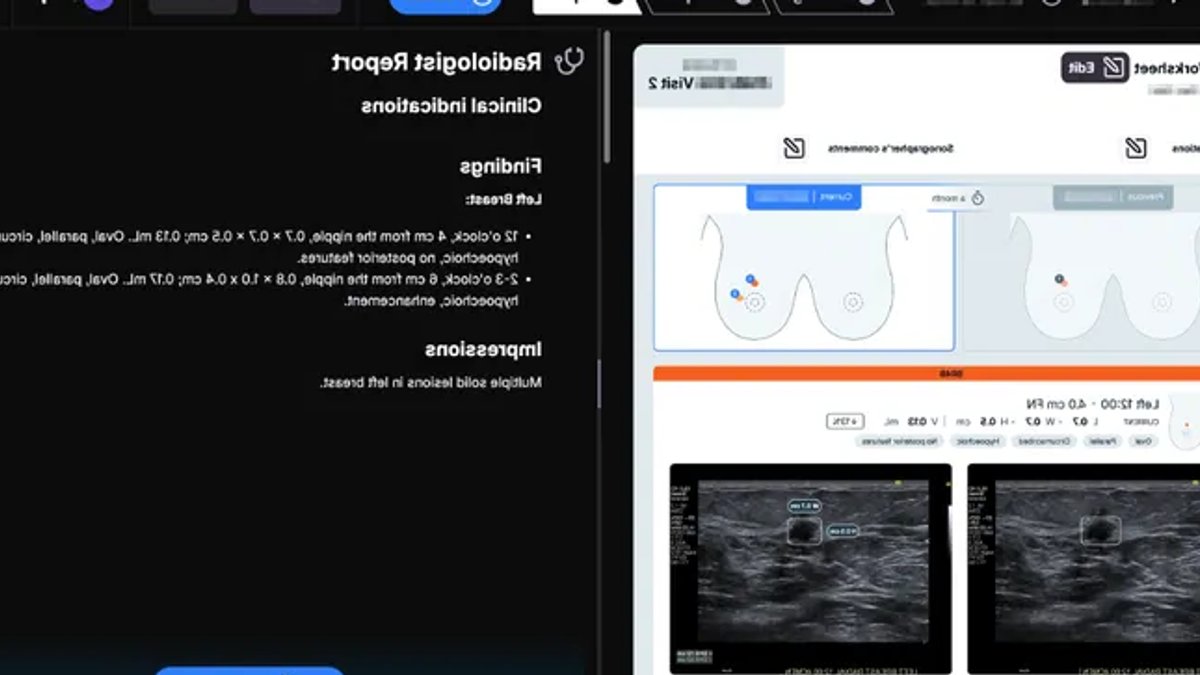
DeepHealth received FDA 510(k) clearance last week for an artificial‑intelligence system that reads breast ultrasound images and automatically produces a draft report.
Radiologists maintain final decision authority.
How the tool works and its reported performance
The system is designed to help clinicians locate suspicious soft‑tissue lesions, describe characteristics such as shape, orientation and margin, and generate a report that highlights key findings and impressions. Radiologists retain ultimate authority over the final assessment, meaning the AI output serves as a preliminary aid rather than a replacement.
In the data submitted to the agency, DeepHealth reported that the ultrasound feature raised sensitivity for breast cancer detection by 8 percent. The same study indicated that radiologist interpretation times fell by 37 percent when the tool was used.
Related: Siemens Healthineers Appoints New Americas Chief
The results were based on testing with 16 radiologists at various imaging centers and hospitals, though the full study has not yet been published.
DeepHealth’s parent company, RadNet, intends to roll out the tool across its network of more than 400 outpatient imaging centers by the end of the year. The company estimates that over 700,000 breast ultrasound examinations per year within its network could qualify for reimbursement under an existing CPT code for quantitative ultrasound tissue characterization.
Context within DeepHealth’s broader product line
The newly cleared system joins DeepHealth’s existing breast‑cancer suite, which already offers reporting and analysis tools for mammography. While mammograms are the primary screening method, ultrasounds are frequently used as a supplemental test for patients with dense breast tissue or atypical findings.
RadNet acquired the ultrasound technology when it purchased See‑Mode Technologies in 2025, and later integrated the product with DeepHealth’s digital‑health platform. The move reflects a broader industry trend toward combining image analysis with automated report drafting.
With the clearance, DeepHealth plans to market the tool to customers who can pursue reimbursement through the established CPT code. The company expects the addition to speed up workflow and potentially improve diagnostic accuracy across its extensive imaging network.
Related: Boston Scientific Plans Restructuring $800M Charges Expected
Other AI‑driven imaging solutions are also under FDA review. Aidoc and Cognita have each earned breakthrough device designation for tools that read chest X‑rays and generate draft reports for radiologist review, indicating a growing regulatory focus on AI‑assisted diagnostics.
From a practical standpoint, the ability to automate parts of the reporting process could alleviate some of the staffing pressures that many imaging centers face, especially as demand for breast‑cancer screening continues to rise. By handling routine description tasks, the AI may free radiologists to concentrate on more complex cases, though the technology’s real‑world impact will depend on how quickly clinicians adopt it and integrate it into existing workflows.
RadNet’s estimate of eligible ultrasound studies suggests a sizable market, but the actual uptake will hinge on factors such as reimbursement policies, provider confidence in AI outputs, and the availability of training for staff.
Overall, the FDA clearance marks a step forward for DeepHealth’s AI ambitions, positioning the company among a small group of vendors with cleared tools that both interpret images and draft reports. The next months will reveal whether the promised efficiency gains translate into measurable improvements in clinical practice.
