Johnson & Johnson’s Ottava surgical robot secured U.S. authorization last week, months sooner than analysts predicted and just before a major industry event. The Food and Drug Administration’s de novo clearance allows the system to perform multiple general surgery procedures in the abdomen, positioning it as a new competitor in a market long controlled by Intuitive’s da Vinci.
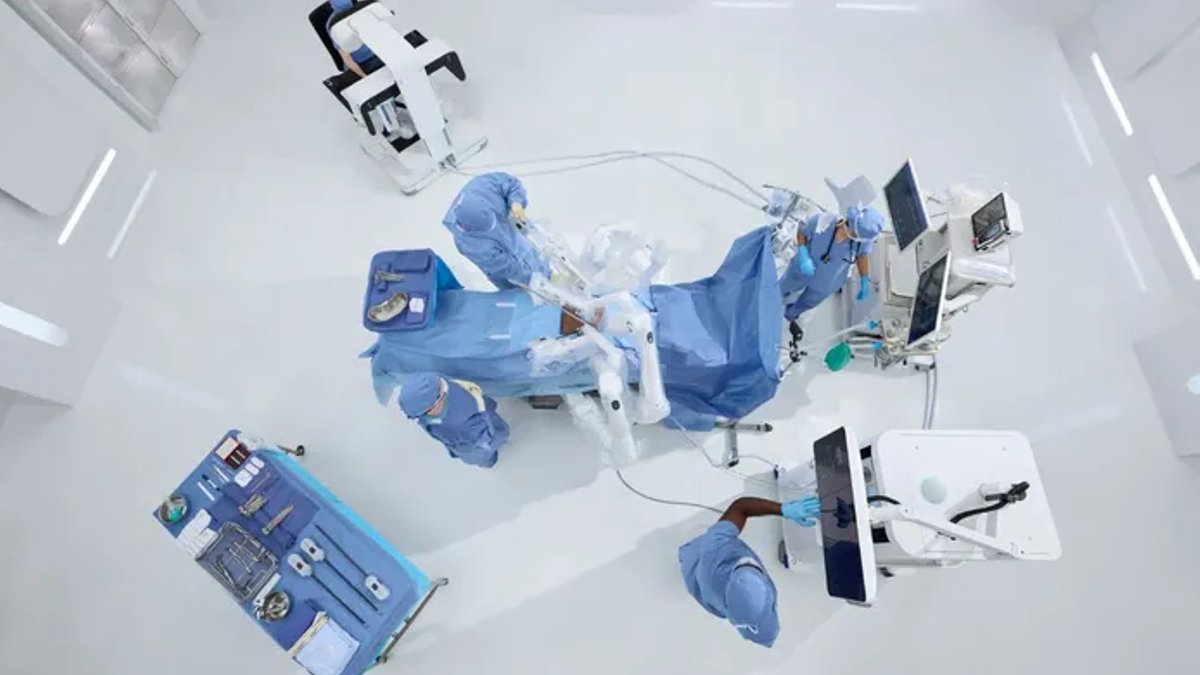
The early approval caught many by surprise. The company is leveraging its extensive surgical background and Ottava’s unique design to differentiate itself. Instead of relying on external booms and carts like da Vinci or Medtronic’s Hugo, Ottava incorporates four robotic arms directly into the operating table, eliminating the need for separate equipment.
How Ottava differs from existing systems
Rocco De Bernardis, who leads Ottava globally for Johnson & Johnson, described the system as a significant shift. “Innovation doesn’t follow a straight path,” he said. “We removed booms and carts to create four robotic arms fully built into the table.”
Related: Medtronic backs CoreMap with $37M funding
The arms retract beneath the surface when idle, enabling surgeons to switch between open, laparoscopic, or robotic approaches without reconfiguring the room. The system occupies 30% to 50% less space than leading alternatives, making it compatible with most existing operating rooms. De Bernardis, who has a mechanical engineering background, highlighted the design’s ease of use for surgical teams.
The system also integrates Johnson & Johnson’s existing surgical instruments. Hospitals have used the company’s Ethicon tools for decades to reduce complications such as leakages, infections, and postoperative bleeding—problems linked to half of all surgical issues. “A robotic system is only as good as its instruments,” De Bernardis said. “Poor tissue handling can create serious problems.”
Rollout plans and future expansion
Johnson & Johnson will first collaborate with top U.S. hospitals experienced in robotic surgery. These institutions will help refine Ottava’s introduction and gather evidence to demonstrate its benefits. While the initial approval covers general surgery, the company’s broader vision includes expanding Ottava’s applications beyond general surgery.
De Bernardis stated, “We aim to make Ottava a global program.” The system is designed to fit in any site of care, in the U.S. and outside of the U.S.
Related: Boston Scientific trims outlook again
If Ottava succeeds, it could change how hospitals allocate space. Its compact size allows any operating room to support robotic procedures without renovations. Smaller hospitals or those reluctant to invest in dedicated robotic suites may find this flexibility appealing.
Approval marks only the beginning. Johnson & Johnson’s broader vision includes expanding Ottava’s applications beyond general surgery, though the timeline for wider adoption remains uncertain. The company’s established relationships with surgeons and hospitals could help, but robotic surgery is highly competitive, and clinical results will decide Ottava’s future.
Medtronic recently backed a cardiac mapping startup with $37 million in funding, signaling continued interest in robotic and automated surgical technologies.
