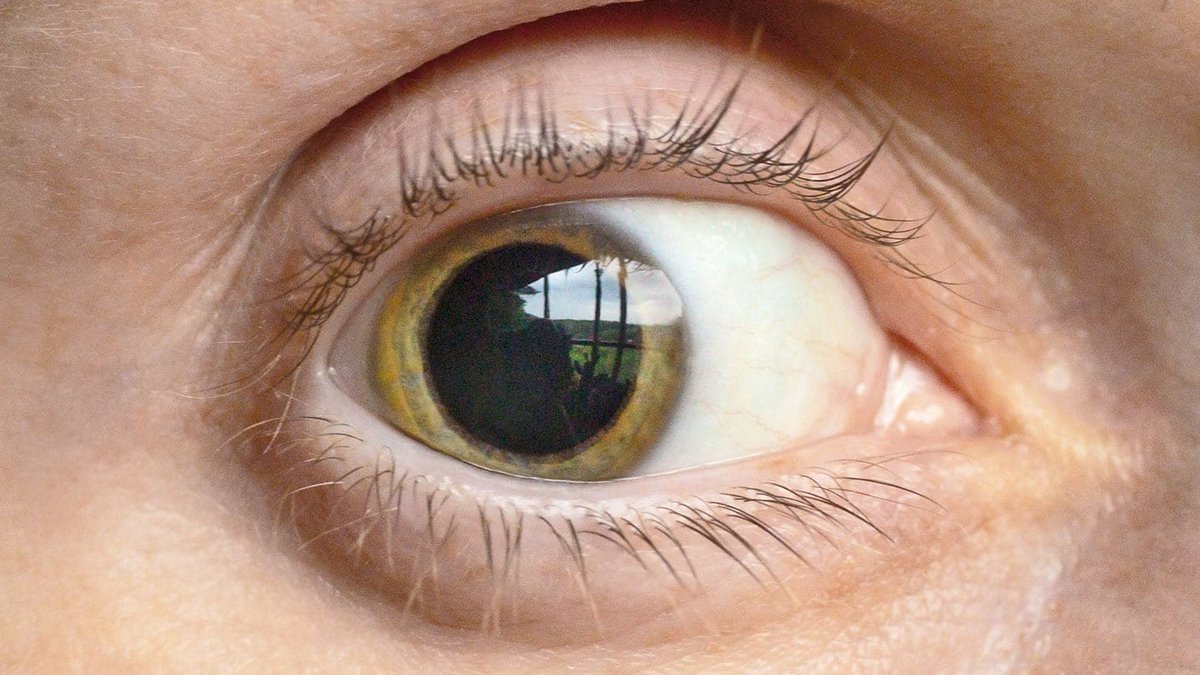
Pupils often grow larger when people are surprised, a response that researchers at Brown University say helps the brain adapt to new information.
A study published in Nature Human Behaviour indicates that pupil dilation signals a spike in arousal that assists the brain in processing unexpected events. The findings suggest that these physical changes are linked to a shift in how the mind perceives and learns from the environment.
Study author Matt Nassar, an associate professor at Brown’s Carney Institute for Brain Science, explains that the dilation functions as a mechanism for adaptation. Nassar states that these rapid fluctuations in arousal are doing something useful in the brain. They enable people to deal with a world that frequently changes from one context to another.
Related: Dollar Store Food May Hide Health Risks
The experiment involved 63 participants who viewed colored squares on a screen and made predictions about what they would see next. Data on pupil diameter and brain waves were collected using EEG. When the colors differed from their predictions, the participants’ pupils dilated and specific brain waves amplified.
Adjusting expectations in real time
The data revealed that these physical signals correspond with a reduction in perceptual bias. When images matched the participants’ expectations, they tended to trust their prior beliefs. However, when the results were surprising, the brain used the pupil dilation and associated brain waves to reset its context.
“The brain holds on to some mental context, and then when it recognizes that you’re in a new situation, you replace that context,” Nassar says. “Changes in pupil diameter, as well as specific EEG readings, are external markers of the brain that shows it’s loading that new context.”
Related: Zimmer Biomet Revamp Exceeds Expectations
By replacing the old context with a new one, the brain clears away the influence of previous expectations. This allows the person to learn from the new information without being distracted by old habits. Harrison Marble, a coauthor on the study, notes that the findings support the idea that this process is linked to learning adjustments.
For the people experiencing these moments, the dilation is a subtle but critical signal that the world around them has shifted. Instead of relying on old maps for a new route, the brain effectively downloads a fresh map to handle the surprise, ensuring that the next reaction is based on the current reality rather than memory.
The norepinephrine spike associated with the surprise acts as a refresh mechanism. This chemical release, originating from the locus coeruleus, marks the transition into a new mode of processing. The physical widening of the eyes is simply a visible sign that the brain is preparing to absorb new data and discard the outdated assumptions that no longer fit the situation.
