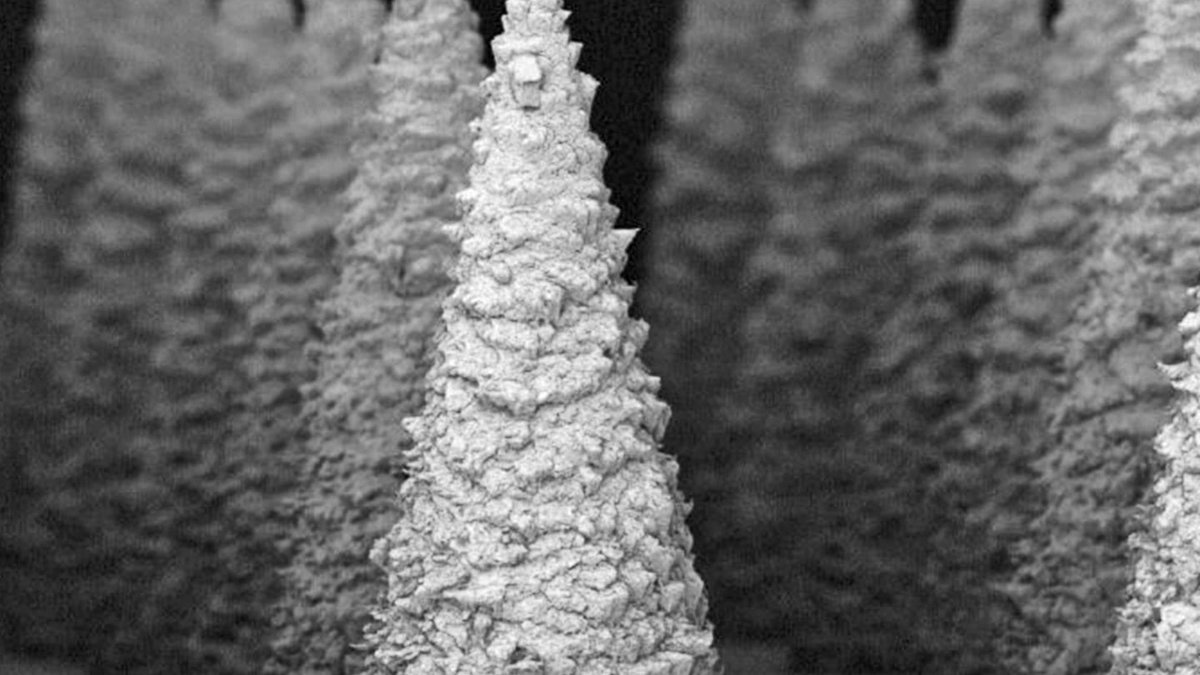
Researchers have made a breakthrough in detecting kidney disease earlier with a painless microneedle patch that can be applied to the skin to capture biomarkers. The patch, developed by a team led by Srikanth Singamaneni, a professor in the mechanical engineering and materials science department, shows promise in supporting home or point-of-care monitoring.
Kidney disease is often silent in its early stages, progressing without symptoms until the disease is advanced. This new research aims to improve diagnosis in earlier stages with a minimally invasive method.
Detecting Early Signs of Kidney Injury
The microneedle patch can quickly and safely capture biomarkers and quantify them accurately. It detected early signs of kidney injury and may one day support home or point-of-care monitoring without requiring refrigeration.
The research team, which includes Yixuan Wang, a doctoral student in Singamaneni’s lab, created microneedles coated with a metal-organic framework (MOF) that can sample interstitial fluid in the skin. The microneedles are coated with a material that creates a shell that detects and preserves neutrophil gelatinase-associated lipocalin (NGAL) antibodies.
NGAL is an early biomarker of acute kidney injury, increasing in the blood within hours of a kidney injury. However, because it requires drawing blood with a needle and cold-chain logistics, it has not been useful in home-based or resource-limited settings.
Overcoming Logistics Challenges
The MOF shell preserved the antibodies for up to four weeks at 50 C (122 F) without refrigeration. This breakthrough overcomes the logistics challenges of traditional biomarker detection methods.
Related: Safer ICU blood pressure monitoring system unveiled
The metal-organic framework encapsulation is a simple and highly effective way to create microneedle sensors that are resilient to environmental challenges and provide a scalable path to minimally invasive biosensing for at-home or remote health monitoring.
The research was supported by funding from the National Science Foundation, the National Institutes of Health, the Congressionally Directed Medical Research Programs, and VA Merit. Additional collaborators on the research are from WashU Medicine and Texas A&M University.
Singamaneni and Jeremiah J. Morrissey are the inventors of the plasmonic-fluor technology, which has been licensed by the Office of Technology Management at Washington University in St. Louis. The results of their research appear in Advanced Materials.
The development of this microneedle patch has the potential to support earlier detection and monitoring of kidney disease, which could lead to better patient outcomes. As they continue to refine this technology, it may become a valuable tool in the fight against kidney disease.
The microneedle patch’s ability to detect NGAL antibodies without requiring refrigeration is particularly significant, as it enables the patch to be used in a variety of settings, including remote or resource-limited areas where access to refrigeration may be limited. This could greatly expand the reach of kidney disease monitoring and improve health outcomes for individuals in these areas.
