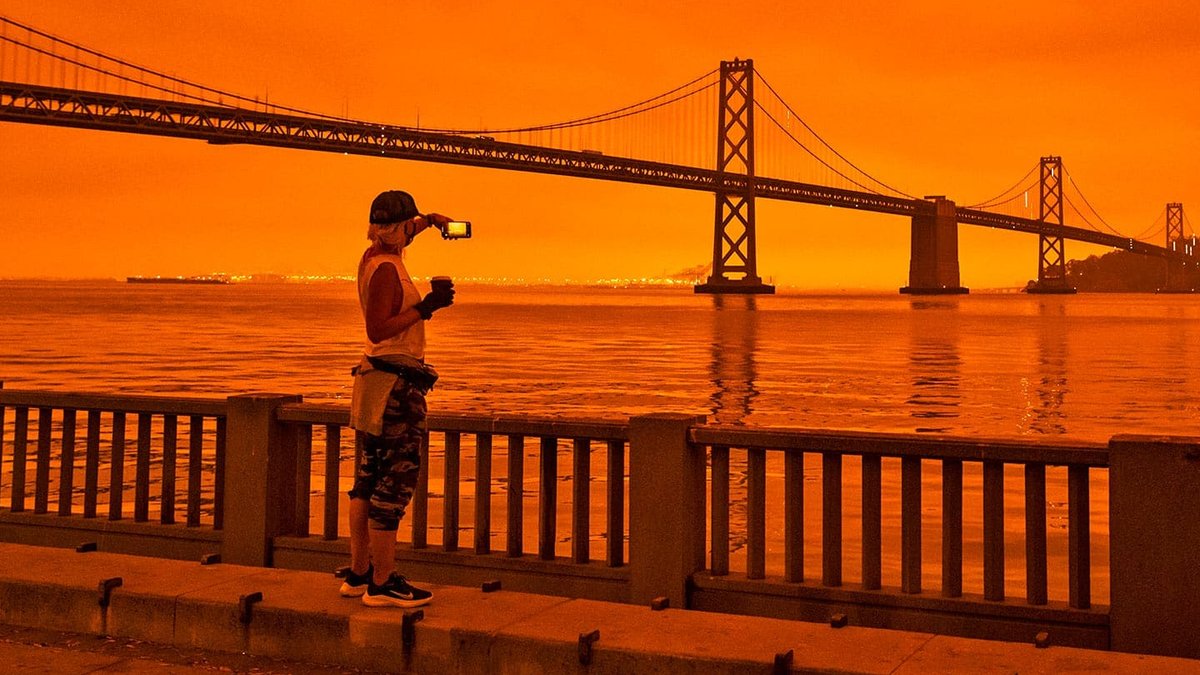
Wildfire smoke is reshaping the American economy in ways that go far beyond the flames themselves. As climate change stretches fire seasons longer and fires grow larger, the financial fallout from smoke exposure is becoming impossible to ignore, according to researchers studying the intersection of air quality and economic output.
The Hidden Cost of Smoggy Days
When smoke from distant wildfires drifts into cities, the Air Quality Index can surge from safe levels below 50 to dangerous readings above 500. That dramatic shift changes behavior. People stay home instead of shopping, dining out, or attending outdoor events. Local businesses that depend on foot traffic lose revenue.
“On days with peak air pollution events, people tend to stay inside more, so they’re not going out and spending money that supports the local economy,” said Casey Wichman, an associate professor in Georgia Tech’s School of Economics.
Outdoor festivals, races, and sporting events get canceled. Retailers and restaurants feel the pinch directly when customers vanish from streets that smell of smoke and look hazy under an orange sky. These disruptions add up across communities already dealing with evacuation orders and property damage from the fires themselves.
Related: Many US schools near toxic sites
Productivity Takes a Hit Indoors Too
Even people working safely inside feel the effects. Research shows that breathing polluted air impairs focus and decision-making. Wichman points to an unexpected example: when air pollution worsens, baseball umpires make more errors calling balls and strikes.
“So even if you’re working from home to avoid the air pollution or have a desk job, you’re still exposed because there’s not a perfect filter between your home and the outdoors, and that reduces the level of productivity you have at work,” he explained.
The problem extends to outdoor labor markets. Agricultural workers and construction crews face higher rates of absenteeism when smoke makes breathing difficult. Some workers take unpaid days off to protect their lungs. Others are sent home by employers citing safety concerns. The economic toll from these disruptions rarely appears in wildfire damage estimates, which tend to focus on burned structures and evacuated areas.
“Although there’s work being done on the social cost of wildfires, a lot of these impacts on productivity are harder to measure, and they’re less likely to be included in the overall cost of wildfires,” Wichman said.
Related: Doomscrolling at work may hurt future raises
This pattern mirrors what happened during the COVID-19 pandemic, when remote work became normalized seemingly overnight. The difference is that wildfire smoke doesn’t respect office walls or air conditioning systems the way some employers assumed. Filters help, but they don’t eliminate exposure entirely for most residential setups.
Health Care Bills Pile Up
The most quantifiable damage shows up in medical records. A study published in Science of the Total Environment estimated short-term wildfire smoke exposure costs Americans $11 billion to $20 billion annually. Long-term exposure runs much higher, between $76 billion and $130 billion per year in health-related damages including hospital admissions, respiratory illness, heart problems, and premature deaths. All figures are in 2010 dollars.
These numbers reflect emergency room visits for asthma attacks, increased rates of chronic bronchitis, and cardiovascular events triggered by fine particulate matter penetrating deep into lungs. The costs cascade through insurance systems, employer health plans, and public programs like Medicare and Medicaid.
Low-income households absorb a disproportionate share of this burden. Workers in service industries and consumer-facing jobs often cannot shift to remote arrangements, and many cannot afford to miss a paycheck even when air quality makes working outside hazardous.
Related: Readers often stumble over complex sentences
“The higher levels of exposure will fall disproportionately on lower-income households who work in more service or consumer-facing industries, who can’t shift their work to be virtual or can’t afford to take a day off of work even if they would prefer to,” Wichman said.
Environmental regulations like the Clean Air Act dramatically improved air quality across the United States over four decades. But wildfire smoke is eating into those gains. Research suggests smoke exposure has erased roughly a quarter of the progress made since the 1970s. In many western states, the reversal is even more severe, with over half of earlier improvements lost to smoky skies.
As high-pollution days become more frequent, Wichman expects more school cancellations, more work-from-home flexibility, and continued disruptions to outdoor labor. He compares the situation to snow days, when hazardous conditions shut down cities for brief periods. The difference is that wildfire smoke can persist for weeks, turning what should be occasional disruptions into a chronic drag on local economies.
